

AI Overviews Content Strategy, Nowadays, when we search for something online, the first thing we see isn’t the #1 ranking website anymore. Instead, we are greeted by a large answer box where Google summarizes the information for us. Many of you are likely familiar with this major shift—it’s called Google AI Overviews.
As user behavior changes from clicking multiple websites to getting answers directly on the search page, content creators, business owners, and SEO professionals must figure out a new puzzle: “How do we get our content featured in AI Overviews?”
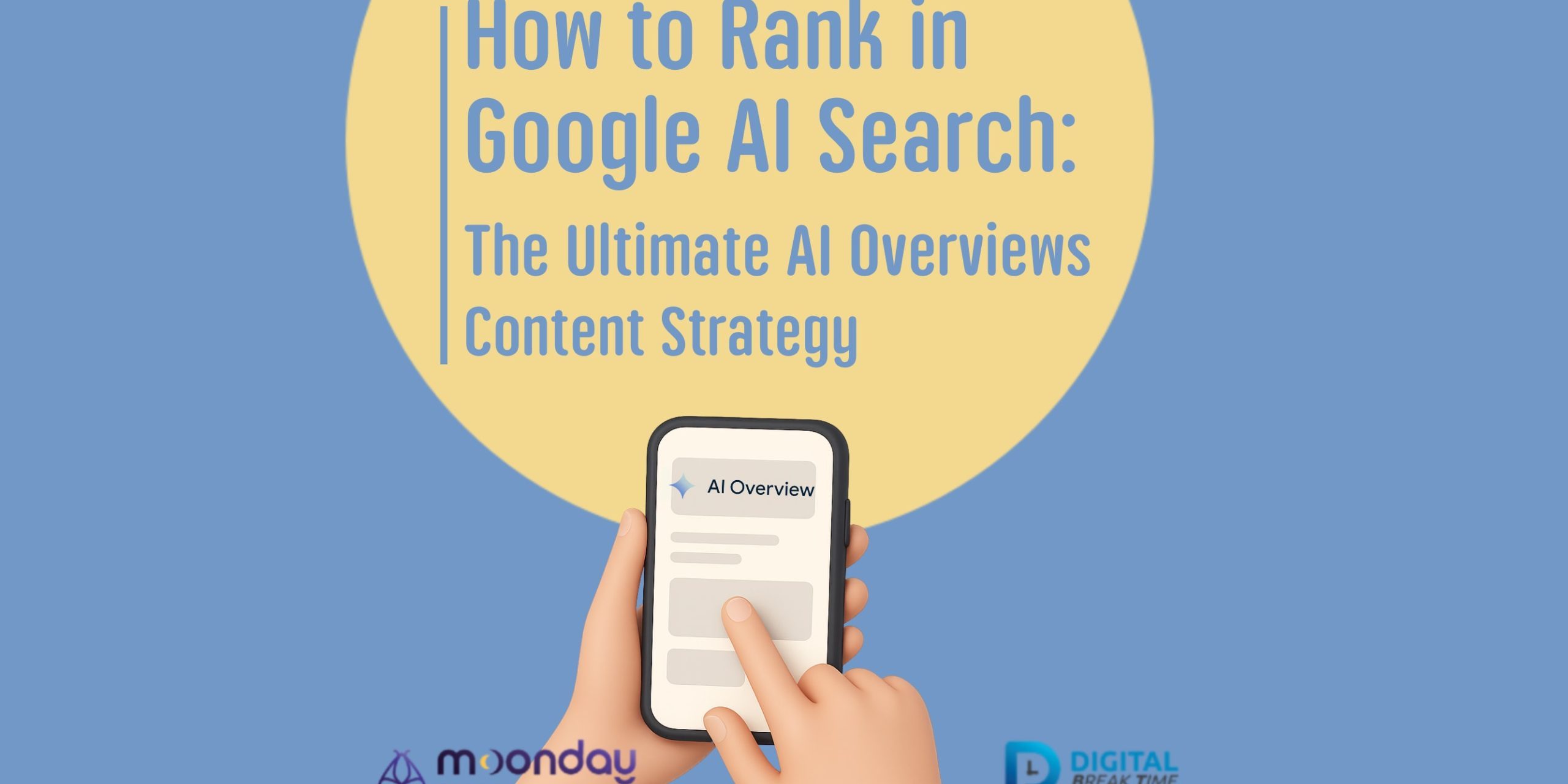
How to Rank in Google AI Search: The Ultimate AI Overviews Content Strategy
What are AI Overviews?
AI Overviews is a feature where Google uses Artificial Intelligence to summarize answers from multiple sources across the internet, displaying them right at the top of the search results.
In the past, Google’s job was to rank the best websites for you to click and read. Now, Google has taken on the role of summarizing the answers for you. While this is highly convenient for everyday users, for businesses, it means our SEO for AI Search must evolve. We need to focus not just on ranking, but on building an effective AI Overviews Content Strategy so that the AI chooses us as its reference.
How Does Google Choose Content for AI Overviews?
This is the million-dollar question. Currently, Google hasn’t officially released a detailed checklist or specific ranking factors for AI Overviews.
However, based on Google’s general guidelines and observations from SEO experts, the core factors remain the same. It comes down to Website Authority, Content Quality, and Experience & Expertise.
Website Authority
Even if your article is incredibly well-written, it might be hard to get referenced if your website lacks authority. Google evaluates a website’s trust through several factors:
- A strong, consistent history of producing good content.
- High-quality backlinks from other reputable websites.
- Being mentioned or cited by other credible sources.
- Having a clear, recognizable brand identity.
In simple terms, Google must trust your site before its AI confidently uses your information to answer users.
Content Quality
In the era of AI search, quality means providing the absolute best answer to a user’s query. Content that gets referenced usually:
- Answers the question completely.
- Explains complex topics clearly.
- Provides highly accurate information.
- Goes deep enough into the subject matter.
Ultimately, the AI needs reliable sources that actually solve the searcher’s problem.
Experience & Expertise (E-E-A-T)
The concept of E-E-A-T (Experience, Expertise, Authoritativeness, Trustworthiness) is more crucial than ever. Google wants to see that the person writing the article truly knows what they are talking about.
For example, if you are writing about digital marketing, sharing real-world experiences, actual experiments, or real business problems you’ve solved holds much more weight than just rewriting information from other sites. AI can easily generate generic summaries, but it cannot replicate genuine human experience.
How to Optimize Your Content for AI Overviews
If you ask me as an SEO specialist, good SEO principles still apply, but we need to execute them better. Here is how you can adapt your content to win in this new landscape:
Answer Questions Clearly and Directly
When people search, they want answers—not a 10-paragraph introduction before getting to the point. We’ve noticed that content frequently referenced by AI usually answers the main question right at the beginning of the article. You can expand on the details later. The clearer and more direct your answer is, the easier it is for the AI to understand and pull your content.
Structure Your Content for Easy Reading
Great content must also be well-organized. You should format your articles by:
- Using H2 and H3 headings systematically.
- Adding an FAQ (Frequently Asked Questions) section.
- Using bullet points for readability.
- Summarizing key takeaways.
- Implementing appropriate Schema Markup.
This doesn’t just help human readers; it makes it significantly easier for Search Engines to process and categorize your content.
Cover the Entire Search Intent
A common mistake is answering only one question when the reader actually has several follow-up questions in mind. For instance, if someone searches “What are AI Overviews?”, they probably also want to know:
- How does it work?
- Does it affect my current SEO?
- Can a new website be featured?
- How should I adjust my content strategy?
If you answer all these related questions in one comprehensive article, Google is more likely to view your content as the ultimate resource for that topic.
Include Real Data and Credible References
Today, anyone can use AI to write basic content. What makes your content stand out and look trustworthy is real data. Make sure to include:
- Industry statistics
- Research papers
- Experiment results
- Case studies
- Links to authoritative sources
The more factual data you provide, the higher your content’s credibility in the “eyes” of the AI.
Beyond Content: What Else Should You Do?
Build an Omnichannel Presence
Take a look at big brands; their information isn’t just sitting on their website. It is spread across multiple channels like social media platforms and industry reference sites. The more Google sees your brand active across various platforms, the better it understands your brand’s identity and overall authority.
Build Topical Authority
Topical Authority means convincing Google that you are a genuine expert in a specific niche. If you run a business website, don’t just write one basic article about your industry. Build out a cluster of related topics. For example, if you are an agency, you should write about:
- AEO (Answer Engine Optimization)
- SEO for AI Search
- Google Search Console guides
- Content Marketing strategies
- Technical SEO
By consistently publishing high-quality content on these interconnected topics, Google will start to recognize your website as a true industry expert.
What NOT to Do if You Want to Feature in AI Overviews
- Publishing unedited, AI-generated content without human review.
- Merely rewriting or copying content from other websites.
- Creating thin, superficial content that lacks depth.
- Failing to provide credible sources or references.
Conclusion: Winning the AI Overviews Game
To sum it all up, AI Overviews haven’t killed traditional SEO. Instead, they are pushing content creators to get back to the basics: creating genuinely high-quality content that helps users.
Start by building a strong SEO foundation, answering searchers’ questions directly, showcasing your real-world experience, and consistently building your brand’s authority. Ultimately, landing a spot in AI Overviews is the reward for executing an excellent AI Overviews Content Strategy—making your content so incredibly helpful that Google’s AI has no choice but to reference it as the best answer.
Follow Digital Break Time
Facebook, X, Line Official Account, Instagram, Spotify, YouTube, Apple Podcast
Originally in Thai. Translated to English with the help of Gemini.